
Iron County Arrest Records and Court Charges
An Iron County arrest record is the account of the arrest itself. It names who was taken into custody, the agency that made the arrest, and the booking that follows at intake. A deputy or officer logs the time, the alleged offense, and the basic details of the person. That arrest, on its own, is not a charge. The prosecuting attorney reviews what the police bring forward and then decides which formal charges to authorize. Iron County uses a prosecuting attorney, not a district attorney, and that office reviews and authorizes felony and misdemeanor charges before they reach the court clerk.
The arrest record and the court charge record are two different files. The booking side belongs to the sheriff and the jail, and that custody detail sits with the county's Iron County inmate records. The court charges after arrest are what the prosecutor files, and they get tracked at each hearing until the case ends. The full case file, with the pleas, the disposition, and any sentence, lives with the Iron County criminal court records. Knowing which file you need saves time, because no single office holds all of it.
How to Find Iron County Arrest Records and Charges
Michigan does not give Iron County a separate local case portal. The statewide MiCOURT Case Search is the main online path, and it is where a charge and its current status show up once a case opens. Depending on the court, civil, traffic, criminal, domestic, and probate cases may be visible there. Booking detail is not in that system. The arrest and jail side stays with the sheriff, so the roster route runs through the jail phone line rather than the case portal.
- Open MiCOURT Case Search and choose the public case-search mode.
- Search by party name if you know the person, or by case number if you have it.
- Open the case and read the charge list attached to it.
- Check each charge for its statute code, its level, and its current status.
When the case is not online, or the record is older, the counter route works. The District Court Clerk in Suite 5 answers charge questions at (906) 875-0619, and the Iron County Prosecuting Attorney in Suite 1 handles the charging side at (906) 875-6628. One arrest can also roll up into a statewide criminal history, and the state registry and offender systems below cover that broader lookup.
Charging Documents After an Iron County Arrest
The charge record begins when the prosecutor files a charging document. The arrest happens at booking, but a case does not truly start until that paperwork reaches the court. Michigan uses three main charging documents, and the one used depends on the offense. A complaint often opens a misdemeanor. An information is the prosecutor's felony charge after a preliminary examination binds the case over to circuit court. An indictment is a felony charge returned by a grand jury where that route is used. Each one lists the specific offense, the statute, and the person accused.
| Complaint | Information | Indictment | |
|---|---|---|---|
| Filed By | Officer / prosecutor | Prosecutor | Grand jury |
| Common For | Misdemeanors | Felonies after bindover | Serious felonies |
| Court | District Court | Circuit Court | Circuit Court |
| Starts | The case | The case | The case |
In Iron County a felony can start in district court and move to circuit court after bindover, which is the point where a complaint gives way to an information. A misdemeanor usually stays in district court on the complaint. That split is why one person's charges may be logged under two courts as the case moves forward.
Iron County Charge Status and What It Means
Charges are not fixed. They shift as a case moves. A prosecutor can amend a charge, reduce it, add a new one, or drop it. A judge can dismiss a count. The words attached to each charge tell you where things stand, and they matter as much as the charge name. A charge marked pending is still live. A charge marked dismissed is closed without a conviction. The table below sorts out the common status terms a reader will see in the case history.
| Status | What It Means |
|---|---|
| Pending | The charge is filed and active, with the case still open and awaiting a hearing or trial. |
| Amended / Reduced | The prosecutor changed the charge, often to a lesser offense, so the original count no longer stands as filed. |
| Dismissed | The court dropped the charge, so it ends without a conviction, sometimes as part of a plea deal. |
| Nolle Prosequi | The prosecutor formally chose not to pursue the charge, which ends it before any verdict. |
Reading status wrong is a common mistake. A dropped or dismissed count does not mean the whole case ended, since other charges from the same arrest may still be live. The safest read is to check every count on the case, not just the first one listed.
Charges vs. Convictions
Being charged is not the same as being convicted. A charge is an accusation that the case is not yet proven. A conviction comes only after a plea or a verdict. This gap is the single most misread part of an arrest record, and it is why a filed charge should never be treated as guilt. The comparison below lays out the difference at each step.
| Charge | Conviction | |
|---|---|---|
| Stage | Accusation | Verdict or plea |
| Burden of Proof | Probable cause | Beyond a reasonable doubt |
| Outcome | Case still open | Guilt decided |
| Public Record | Yes | Yes |
Both a charge and a conviction can appear in the public record. The difference is what each one proves. A person may be arrested, charged, and later cleared when the charge is dropped or the court finds no conviction. The MiCOURT note that some courts show criminal case data only when sentencing fell within seven years of the search is one more reason the online view can be partial.
Charge Codes and Severity Levels in Michigan
Every charge ties back to a statute. The code on a charge points to the exact Michigan law the person is accused of breaking, and it sets the severity level. Michigan sorts offenses into three broad tiers, and the tier decides which court hears the matter and how serious the record looks.
- Felonies are the most serious offenses and are handled in circuit court after bindover.
- Misdemeanors and ordinance violations stay in district court under the district court's authority.
- Civil infractions, such as many traffic matters, are the lowest tier and carry fines rather than jail.
One arrest can produce several separate charges at once. A single incident may generate a felony count, a misdemeanor count, and an infraction, each with its own code and its own status. That is why the charge list on a case can run longer than the reason for the arrest. Reading each code against the statute shows what the person actually faces, not just the label a headline might use.
Statewide Charge Lookups Beyond Iron County
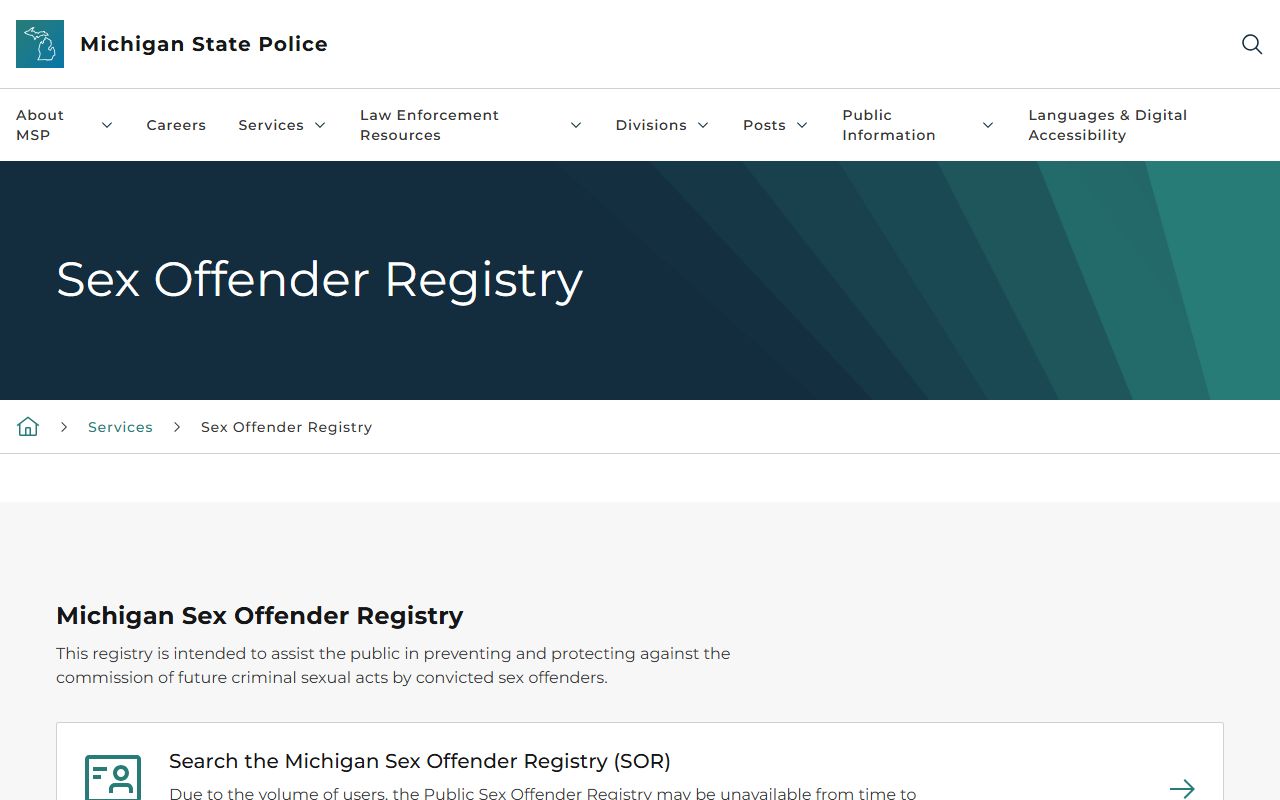
Some charge questions reach past the county. When a case leads to a conviction that must be registered, or when someone is sentenced to state supervision, the record shows up in statewide systems. The Iron County Prosecuting Attorney's own page points readers toward these state hubs for that broader context. For certain sex offenses, the conviction feeds the public Michigan Sex Offender Registry, which lets anyone check by name or area.
The state registry is run by the Michigan State Police and is a good example of a charge record that outlives the local case file. It shows how a single conviction can create a separate public record maintained at the state level rather than the county counter.
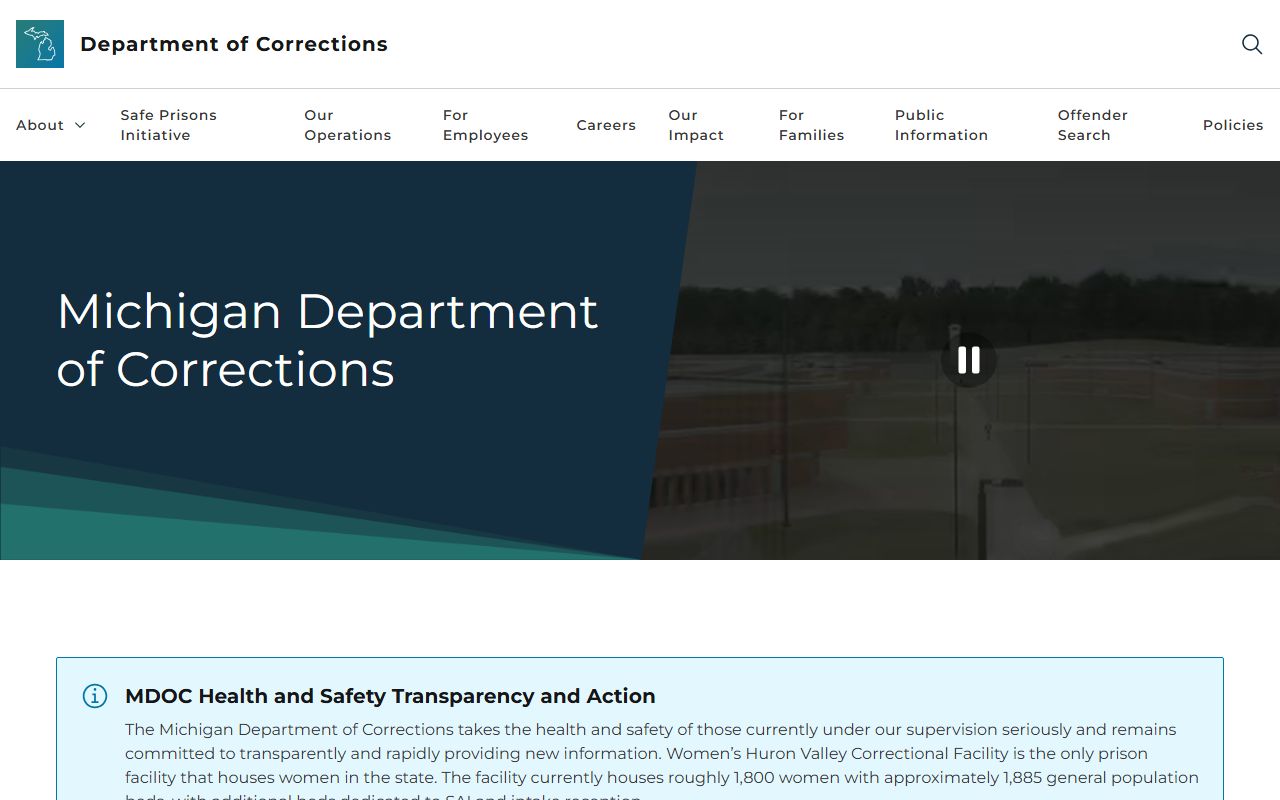
Sentenced prisoners, parolees, and probationers are tracked by the Michigan Department of Corrections, which runs the state offender search. The corrections agency holds the custody and supervision status that a county charge record does not, so it is the right stop once a person leaves local custody for state supervision.
These state tools do not replace the county view. They add the pieces a local charge record leaves out, such as prison status or registry duty, and together they give the fuller picture of where a charge ended up.
Sealing and Expunging Iron County Charge Records
Not every charge record stays public forever. Michigan now offers both petition-based set-aside relief and automatic Clean Slate relief for qualifying convictions. A sealed record is hidden from ordinary public access but still exists in nonpublic systems. An expunged, or set-aside, conviction is treated as though it was removed from public view, though the underlying data may remain in law-enforcement files. A charge that ends in dismissal is different again, since there was no conviction to set aside. The Michigan Attorney General expungement assistance program helps people understand which path fits.
The Attorney General's expungement resource is the plain-language starting point for anyone weighing whether a past charge can come off the public record. It matches the county reality, where a set-aside petition is filed in the convicting court and copies must go to the prosecutor and the state.
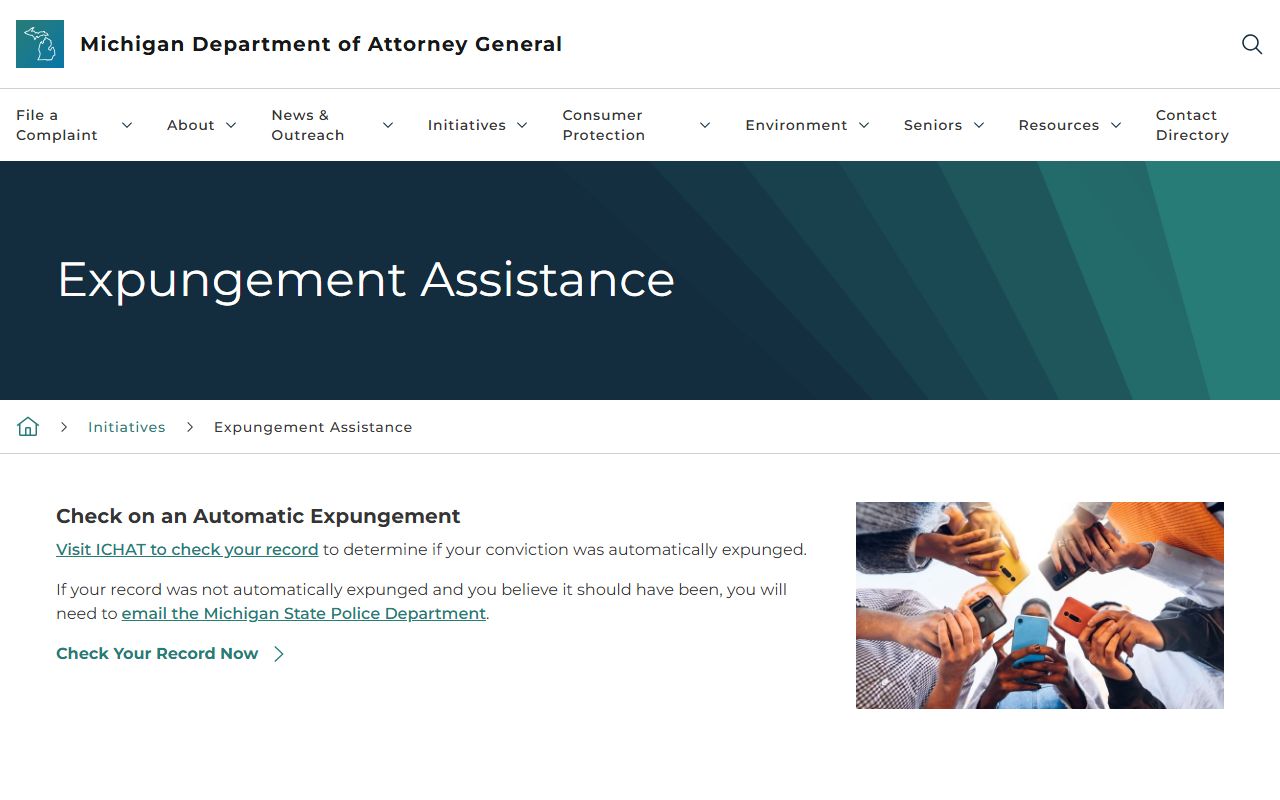
A page should not promise that a charge can simply be erased. Some convictions clear automatically once the waiting period runs, others need an application, and certain driving-related convictions stay on the state driving record even after the court sets the case aside. The safe read is that some Iron County charge records may be set aside or automatically expunged under Michigan law, not that any record can be wiped on request.
Restricted Iron County Charge Records
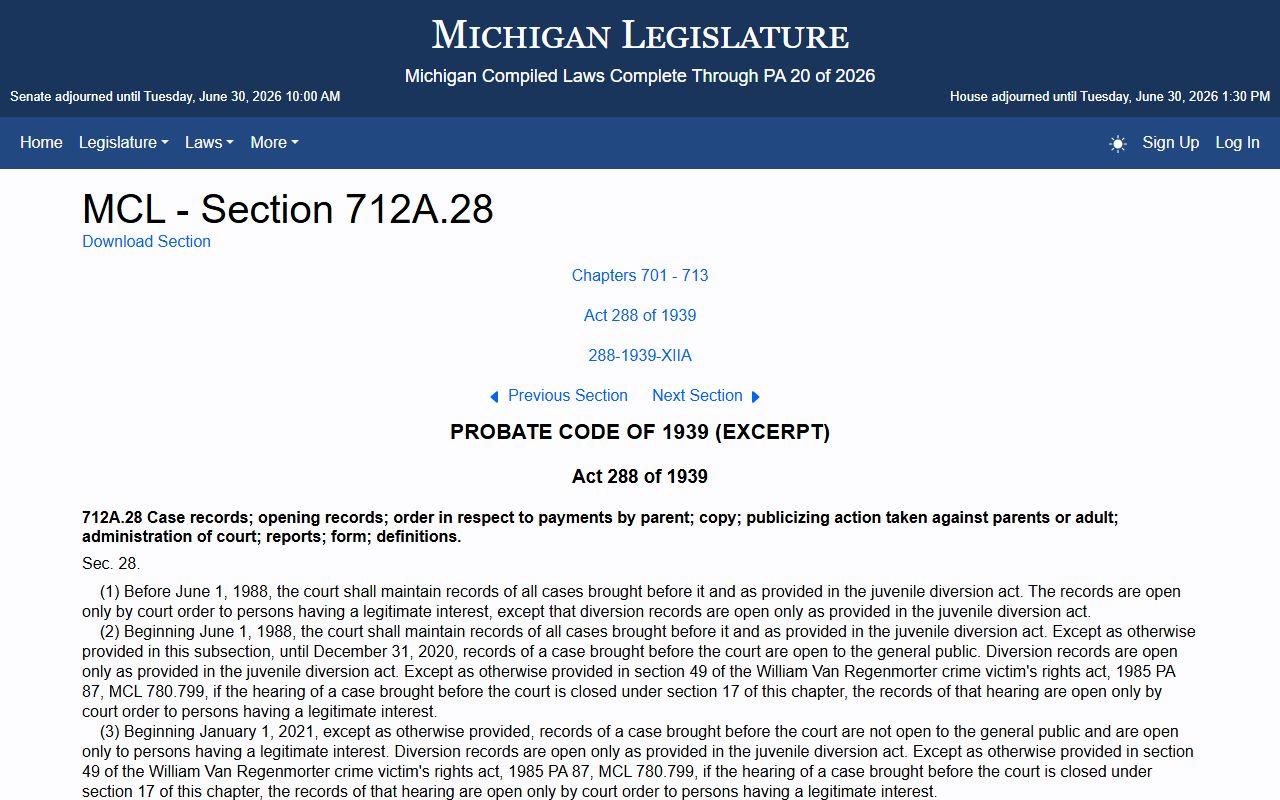
Some charge records are closed to the general public. Juvenile charges are the clearest example. Michigan law under MCL 712A.28 keeps juvenile case records out of ordinary public view, and they open only by court order and only to those with a legitimate interest. Iron County runs a juvenile register and juvenile probation office locally, but that does not make those files searchable like an adult case.
The juvenile records statute is the reason a young person's charges will not appear in a normal case search. Sealed matters, adoption records, and mental-health commitment files carry the same narrow access, so the online charge view is never the whole story.
Even in open adult cases, Michigan court records may hide sensitive fields such as Social Security numbers, financial-account data, and minor identities. Ongoing investigations and some dismissed matters can also be held back. That is why a public docket and a complete case file are not the same thing.
Important: This site is not a consumer reporting agency under the Fair Credit Reporting Act, and its records may not be used to decide credit, employment, housing, or insurance.