
How to Check for an Iron County Warrant
Iron County keeps no public active-warrant roster online. The official county pages reviewed show no searchable warrant list, so the honest first step is to accept that a yes-or-no answer will not come from a website. It comes from a call. The sheriff's office is the best first local check, and it runs around the clock. If the question is about a missed court date, the district court and its magistrate are the likely venue. If the question ties to a filed charge, the prosecuting attorney holds that context. Anything left that can be released may come through a public records request.
The Iron County Sheriff's Office anchors the local warrant process, and its sheriff's office page lists the staff and the 24-hour phone line that a warrant question usually starts with.
That office sits at the west end of the courthouse complex, so a caller reaches the same building that houses the district court, magistrate, prosecutor, and records staff. Because the offices are clustered, the practical warrant check moves office to office by phone in a short chain.
- Call the Iron County Sheriff's Office at (906) 875-0650 and ask whether an active warrant exists for the named person. This is the best first local check.
- For a bench warrant tied to a missed hearing, contact the District Court Clerk at (906) 875-0619 or the Magistrate at (906) 875-0618, since bench warrants often flow through the district court.
- If the warrant question connects to a filed charge, call the Iron County Prosecuting Attorney at (906) 875-6628 for the charging and warrant-request context.
- For anything releasable that is not answered by phone, submit a request to the Iron County FOIA Coordinator at (906) 875-3301.
No single office holds every kind of warrant, so the chain matters. A sheriff clerk can confirm a warrant in the local system, but the court side often knows more about a bench warrant, and the prosecutor knows more about a warrant requested with a charge.
Types of Iron County Warrants
Warrants in Iron County follow standard Michigan categories. The county Friend of the Court handbook glossary even defines a bench warrant in plain terms, which confirms the local system uses ordinary warrant language rather than any unusual local label. Knowing the type helps a person pick the right office to call, because an arrest warrant, a bench warrant, and a search warrant do not all live in the same place.
- Arrest warrant - A court order that authorizes police to take a named person into custody, usually issued after a sworn complaint and a finding of probable cause.
- Bench warrant - The county handbook defines this as a court order to arrest a person and bring them before the court, most often issued when someone misses a scheduled hearing.
- Search warrant - A judge's order that lets officers search a described place for described items, aimed at property and evidence rather than at arresting a person.
- Failure-to-appear or capias warrant - An order that issues when a person does not show for a required court date or does not comply with a court obligation.
District court magistrates handle much of the probable-cause and arraignment work that produces these orders. Michigan law spells that out in MCL 600.8311 for district court duties and MCL 600.8511 for magistrate authority. The full case behind an arrest or bench warrant, including charges and any later plea, lives in the Iron County criminal court records.
Offices to Call About Iron County Warrants
Because there is no online warrant search, the office list is the tool. Each office covers a different slice of the warrant picture, and all of them work from the courthouse complex at 2 South 6th Street in Crystal Falls. The table below pairs each channel with its phone line and the kind of warrant question it answers best.
| Office | Phone | What It Handles |
|---|---|---|
| Iron County Sheriff's Office | (906) 875-0650 | Best first check for an active local warrant, open 24/7 |
| Magistrate | (906) 875-0618 | Bench warrants and probable-cause matters in district court |
| District Court Clerk | (906) 875-0619 | Court-side warrant and hearing records |
| Prosecuting Attorney | (906) 875-6628 | Charge-related warrants and warrant-request context |
| FOIA Coordinator | (906) 875-3301 | Releasable records not answered by phone |
A public records request is the formal backstop. Michigan's Freedom of Information Act, at MCL 15.231, opens public records unless a statute says otherwise, and the county's FOIA page explains how to file. Some warrant material stays closed, though, since the law-enforcement and privacy exemptions in MCL 15.243 shield active investigative records.
Custody status is a separate question from warrant status. If the concern is whether a person has been booked or released, the state MI-VINE service tracks that.
The state describes how the tool works on its MI-VINE information page, which explains the free and confidential custody alerts available by phone, web, and app.

MI-VINE does not list warrants, but it does send bond-release or escape notifications, so it pairs well with a sheriff call when someone wants to follow what happens after an arrest.
What an Iron County Warrant Record Shows
When a warrant record is released by an office, it carries a predictable set of fields. These fields reflect general Michigan warrant-record structure. In Iron County they are obtained by contacting the sheriff, court, or prosecutor rather than by pulling a result from a public search box. The table lists the fields a released warrant record commonly includes.
| Field | What It Shows |
|---|---|
| Warrant Number | The unique file number the issuing court assigns to the warrant. |
| Issue Date | The date a judge or magistrate signed and issued the order. |
| Issuing Court | The court that authorized the warrant, usually the district or circuit court. |
| Charge | The offense or court obligation that prompted the warrant. |
| Bond Amount | The bond set for release, when the court has set one. |
| Status | Whether the warrant is active, served, recalled, or otherwise closed. |
Not every field is public in every case. An office may confirm that a warrant exists while withholding investigative detail, and the bond or charge fields can be limited while a matter is still open. Booking and custody detail, once a warrant is served, appears through the Iron County inmate records channels rather than in the warrant file itself.
What to Do If You Have an Outstanding Iron County Warrant
An outstanding warrant does not go away on its own. It stays live until a court recalls it or an arrest clears it, and a routine traffic stop can turn into a booking when the warrant surfaces. The steadier path is to deal with it on purpose. Confirm the warrant through the sheriff or the district court, learn the charge and any bond amount, and arrange a plan for surrender or a court appearance rather than waiting to be found.
Bond matters here. If the court has set a bond, knowing the amount ahead of time lets a person prepare for release the same day. A bench warrant for a missed hearing can sometimes be addressed by contacting the district court to set a new date, while an arrest warrant tied to a charge usually needs a court appearance and often counsel.
Important: Speak with a licensed Michigan attorney before you turn yourself in on any Iron County warrant, since a lawyer can arrange surrender, bond, and a court date on terms that protect your rights.
Anonymous Tips and Central Dispatch
The county pages reviewed do not document a local Crime Stoppers program or a warrant amnesty offer, so no reward line or tip hotline should be assumed. What does exist is the standard public-safety infrastructure. Iron County runs a Central Dispatch E911 operation, and the sheriff's office takes calls at all hours. A resident who wants to report information about a wanted person works through those real channels rather than a branded tip program.
The county describes the emergency communications setup on its Central Dispatch E911 page. For a non-emergency report or a question about a warrant, the sheriff's administrative line is the right contact, and 911 stays reserved for emergencies in progress.
Note: The sheriff's office is staffed 24 hours a day, so a warrant or safety question can reach a live person even outside normal county business hours.
Restricted Iron County Warrant Records
Some warrants never reach the public at all. A sealed warrant can stay hidden while an investigation is active, which is exactly why a sheriff clerk may decline to confirm certain details even when a warrant does exist. Michigan's FOIA exemptions back that up, since the law-enforcement and personal-privacy shields in MCL 15.243 keep some warrant and investigative records closed until a case moves forward.
Juvenile warrants are tighter still. Under MCL 712A.28, juvenile case records are not generally open to the public and are opened only by court order. That means a warrant tied to a juvenile matter usually will not be confirmed to a member of the public through the ordinary sheriff or clerk call.
Federal warrants sit outside the county system entirely. Iron County falls in the U.S. District Court for the Western District of Michigan, and federal custody is tracked by the Bureau of Prisons rather than the county.
The federal side keeps its own public tool, and the Bureau of Prisons inmate locator lets a person search federal detainees by name.
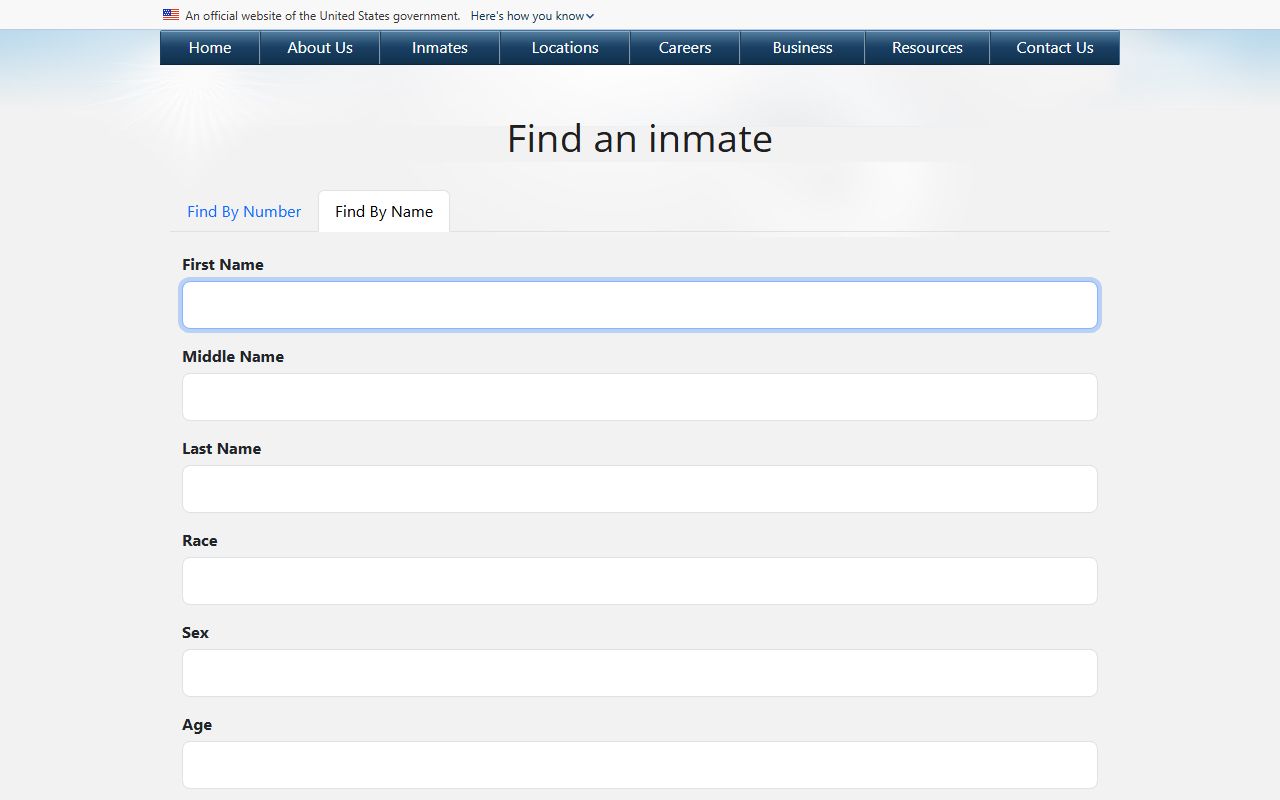
That locator covers people already in federal custody, not open federal warrants, so a federal warrant question still routes to the U.S. Marshals Service or the federal court rather than to any Iron County office.